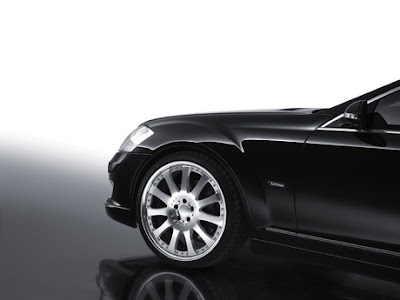
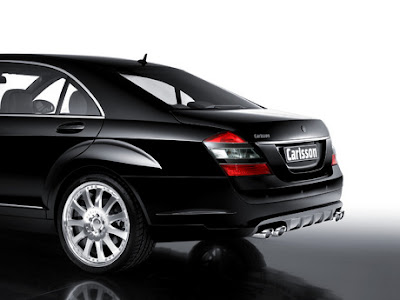
Mercedes has ended the production of a car which effectively started an industry-wide trend of "four door coupes", the CLS coupe. The last ever model of the current generation – a black CLS550 w/ bi-xenon headlamps and AMG body-kit is destined for a U.S customer – rolled off the production line today.
However, CLS enthusiasts needn’t worry as the second generation of the coupe is on its way, and is expected to premiere at the Paris motorshow in early October.
2005 Mercedes CLS500
The CLS was available with a range of V6 and V8 petrol engines as well as a V6 turbo diesel. In the six years of its production, Mercedes sold more than 170,000 units of the car globally, primarily in Australia and the U.S.
Mercedes has ended the production of a car which effectively started an industry-wide trend of "four door coupes", the CLS coupe. The last ever model of the current generation – a black CLS550 w/ bi-xenon headlamps and AMG body-kit is destined for a U.S customer – rolled off the production line today.
However, CLS enthusiasts needn’t worry as the second generation of the coupe is on its way, and is expected to premiere at the Paris motorshow in early October.
2005 Mercedes CLS500
The CLS was available with a range of V6 and V8 petrol engines as well as a V6 turbo diesel. In the six years of its production, Mercedes sold more than 170,000 units of the car globally, primarily in Australia and the U.S.
The CL63 AMG, the lesser of two powerful large AMG-tuned Mercedes-Benz coupes, sits somewhere between excessive and grandiose on the scale of high-end cars. With 518 horsepower on tap at 6800 rpm, the nearly 4,500 pound two-door Mercedes-Benz is hardly sluggish, despite tipping the scales at about double what a subcompact weights. 465 pound-feet of torque from the 6.2 liter V8 and a 7-speed automatic transmission help ensure that the CL63 has ample power in any situation.
New for 2008, the CL63 upgrades the basic CL-Class, introduced for 2007, with the standard range of AMG tuned sporting cues, including a lowered sport suspension with active body control, a unique look inside and out, 20' wheels (versus 18' wheels otherwise), performance tires and a few additional standard features, like ventilated and massaging front seats.
The CL63 AMG, the lesser of two powerful large AMG-tuned Mercedes-Benz coupes, sits somewhere between excessive and grandiose on the scale of high-end cars. With 518 horsepower on tap at 6800 rpm, the nearly 4,500 pound two-door Mercedes-Benz is hardly sluggish, despite tipping the scales at about double what a subcompact weights. 465 pound-feet of torque from the 6.2 liter V8 and a 7-speed automatic transmission help ensure that the CL63 has ample power in any situation.
New for 2008, the CL63 upgrades the basic CL-Class, introduced for 2007, with the standard range of AMG tuned sporting cues, including a lowered sport suspension with active body control, a unique look inside and out, 20' wheels (versus 18' wheels otherwise), performance tires and a few additional standard features, like ventilated and massaging front seats.
The CL63 AMG, the lesser of two powerful large AMG-tuned Mercedes-Benz coupes, sits somewhere between excessive and grandiose on the scale of high-end cars. With 518 horsepower on tap at 6800 rpm, the nearly 4,500 pound two-door Mercedes-Benz is hardly sluggish, despite tipping the scales at about double what a subcompact weights. 465 pound-feet of torque from the 6.2 liter V8 and a 7-speed automatic transmission help ensure that the CL63 has ample power in any situation.
New for 2008, the CL63 upgrades the basic CL-Class, introduced for 2007, with the standard range of AMG tuned sporting cues, including a lowered sport suspension with active body control, a unique look inside and out, 20' wheels (versus 18' wheels otherwise), performance tires and a few additional standard features, like ventilated and massaging front seats.
The CL63 AMG, the lesser of two powerful large AMG-tuned Mercedes-Benz coupes, sits somewhere between excessive and grandiose on the scale of high-end cars. With 518 horsepower on tap at 6800 rpm, the nearly 4,500 pound two-door Mercedes-Benz is hardly sluggish, despite tipping the scales at about double what a subcompact weights. 465 pound-feet of torque from the 6.2 liter V8 and a 7-speed automatic transmission help ensure that the CL63 has ample power in any situation.
New for 2008, the CL63 upgrades the basic CL-Class, introduced for 2007, with the standard range of AMG tuned sporting cues, including a lowered sport suspension with active body control, a unique look inside and out, 20' wheels (versus 18' wheels otherwise), performance tires and a few additional standard features, like ventilated and massaging front seats.
The CL63 AMG, the lesser of two powerful large AMG-tuned Mercedes-Benz coupes, sits somewhere between excessive and grandiose on the scale of high-end cars. With 518 horsepower on tap at 6800 rpm, the nearly 4,500 pound two-door Mercedes-Benz is hardly sluggish, despite tipping the scales at about double what a subcompact weights. 465 pound-feet of torque from the 6.2 liter V8 and a 7-speed automatic transmission help ensure that the CL63 has ample power in any situation.
New for 2008, the CL63 upgrades the basic CL-Class, introduced for 2007, with the standard range of AMG tuned sporting cues, including a lowered sport suspension with active body control, a unique look inside and out, 20' wheels (versus 18' wheels otherwise), performance tires and a few additional standard features, like ventilated and massaging front seats.
In early Mercedes-Benz history, the "S-Class" designation was used colloquially, referring to the letter "S" which designated most of the larger six-cylinder powered vehicles in the company's lineup (but not the luxurious V8-powered 600 limousine). In typical Mercedes-Benz fashion introduced in the late 1920s, the traditional designation of each car consisted of three numbers indicating engine size (up to 770 in the 1930s), and optional letters indicating either engine features ("260D" since the first Diesel of 1936) or body styles ("K" for kompressor (typically a Roots compressor) as in the 1930s 500K or 540K). After World War II, these codes were often carried over from one generation to the next.